Key Insights
Muscle is naturally stronger lowering a weight than lifting it - eccentric strength capacity outstrips concentric strength, which is exactly why slowing the lowering phase works.
Time under tension is doing the work, not just the load on the bar - a controlled three-second descent creates more mechanical tension than a fast rep at the same weight and mechanical tension is one of the main drivers of strength and muscle growth.
The same mechanism builds tendon resilience - slow, loaded lowering is the exact tool used to rehab things like Achilles tendinopathy, which is also why it works to prevent it in the first place.
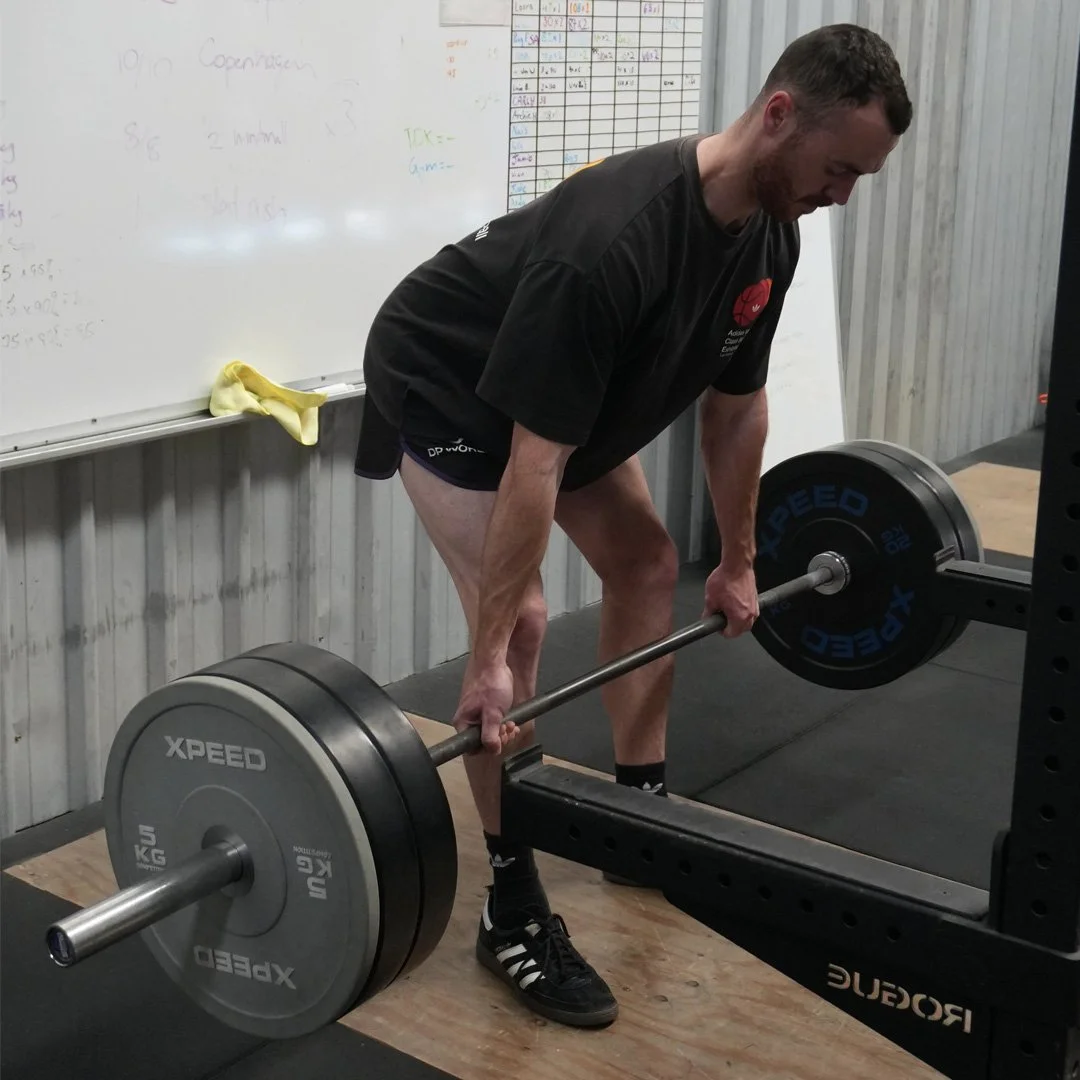
This is a deliberate tempo, not just "training slower" - a controlled descent, a brief pause, a controlled lift, layered onto the main lifts already in the program.
The payoff shows up later, not this week - it's building the tissue capacity that speed and intensity get loaded onto once the season actually starts.
Featured Question
"Why is my program suddenly slower? I'm doing three-second lowers on everything".
An athlete asked us this in his first week back in the off-season program. Fair question - nothing about training slower feels like training harder and this time of year it's tempting to think slower means easier.
It's the opposite. Here's what's actually going on.
You're Already Stronger Than You Think - Just Not Where You've Been Using It.
Every athlete is naturally stronger lowering a weight than lifting it. It's just how muscle works. The problem is that most training only uses that strength by accident, on the way down before the "real" rep starts. Slowing the lowering phase down on purpose means you're finally training the strength you already have, instead of rushing past it.
The Slow Rep Is Doing More Work Than The Fast One.
A three-second lower under control puts more mechanical tension through the muscle than a fast rep at the same weight - and mechanical tension is one of the main things that actually drives strength and muscle growth. This is also why off-season is the right time for it: you don't need to be lifting maximal loads to get a maximal training effect. You need time under tension and that doesn't beat up the joints and nervous system the way constantly chasing heavier weights does.
It Builds The Exact Tissue That Gets Hurt Mid-Season.
This isn't just a strength trick. The same slow-eccentric-loading principle is what's used to rehab tendon injuries like Achilles tendinopathy - which means used proactively, it's one of the better tools for building the resilience that prevents them. Match it to what your sport actually asks of that tissue: calf and Achilles capacity for a sport built on repeated jumping and landing, hamstring capacity - both up near the hip and down near the knee - for a sport built on sprinting and sudden deceleration.
Built For What's Coming, Not For Right Now.
There's no game this week. Nothing about right now needs you to feel fast, explosive or athletic. What it needs is a body that can handle the load once all of that comes back. That's the whole logic of the off-season: bank the capacity now, quietly, so it's already there when the intensity ramps back up.
If you want to know whether your own program actually has this tempo work built in or you're just guessing based on what you did last off-season, write to us (info@virtuscentre.com.au) and we'll give you a straight read.
Not getting our training insights yet? This is exactly the kind of thing we're here to help you with. Subscribe here → and get the Off-Season Unfair Advantage Blueprint free when you join.
Not sure where to start? Send us a quick favour request and we’ll point you in the right direction.